
In today’s industrial landscape, precision, consistency, and efficiency are critical to the success of any manufacturing operation.
From automotive assemblies and industrial machinery to electronics and engineering equipment, businesses rely on accurately manufactured components to ensure reliable performance and long-term durability. This is where CNC machining plays a vital role.
Computer Numerical Control (CNC) machining has transformed the manufacturing industry by enabling the production of complex and high-precision parts with exceptional repeatability.
As industries continue to demand tighter tolerances and superior quality, the role of CNC machined components manufacturers becomes increasingly important.
This guide explores CNC machining, its benefits, applications, manufacturing processes, and the factors businesses should consider when selecting a manufacturing partner for precision-engineered components.
Understanding CNC Machining
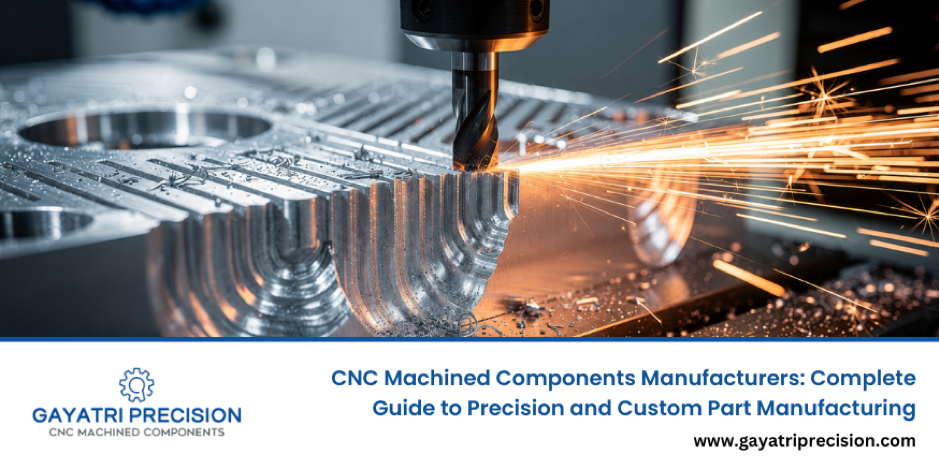
CNC machining is a manufacturing process that uses computerized controls and automated machinery to remove material from a workpiece and create components according to predefined specifications.
Unlike conventional machining methods that rely heavily on manual operation, CNC systems execute programmed instructions with exceptional precision.
The process enables manufacturers to produce intricate geometries, maintain tight tolerances, and achieve consistent quality across production runs.
Modern CNC machines can perform various operations, including:
- Turning
- Milling
- Drilling
- Boring
- Tapping
- Threading
- Surface finishing
These capabilities make CNC machining one of the most versatile manufacturing methods available today.
The Growing Demand for Precision Manufacturing
Industries are constantly evolving, and product designs are becoming increasingly sophisticated. Components must fit perfectly within larger assemblies while maintaining performance under demanding operating conditions.
As a result, manufacturers are looking for reliable partners that can deliver accurate and repeatable production results. Advanced machining technologies help businesses meet strict engineering requirements while reducing errors and material waste.
Precision manufacturing is especially important in sectors where even minor dimensional variations can affect functionality, safety, or product life. The ability to consistently produce components that meet exact specifications makes CNC machining an essential part of modern manufacturing.
What Do CNC Machined Components Manufacturers Do?
Manufacturers specializing in CNC machining provide comprehensive solutions for producing precision-engineered parts from various metals and engineering materials.
Their services typically include:
- Component design support
- CNC turning
- CNC milling
- Precision machining
- Prototype development
- Batch production
- High-volume manufacturing
- Quality inspection
- Surface finishing
By combining advanced machinery with skilled engineering expertise, these manufacturers produce components that meet industry standards and customer-specific requirements.
Key Advantages of CNC Machining
Exceptional Accuracy
One of the most significant benefits of CNC machining is its ability to achieve high levels of accuracy. Computer-controlled systems minimize human error and ensure every component is manufactured according to precise dimensions.
This accuracy is essential for industries that require components with complex geometries and tight tolerances.
Consistent Quality
Consistency is crucial in manufacturing. CNC technology ensures identical results across multiple production cycles, making it suitable for both low-volume and large-scale production requirements.
Each component is manufactured according to the same programmed specifications, resulting in uniform quality throughout the production process.
Faster Production
Automation significantly improves manufacturing efficiency. CNC machines can operate continuously with minimal intervention, reducing production time and increasing output.
This enables manufacturers to meet demanding project timelines without compromising quality.
Reduced Material Waste
Efficient machining processes help optimize material utilization. Precise programming minimizes unnecessary material removal and contributes to cost-effective production.
Reduced waste also supports sustainable manufacturing practices by improving resource efficiency.
Flexibility in Design
Modern CNC equipment can manufacture components with intricate shapes, complex profiles, and detailed features that may be difficult to achieve using traditional machining methods.
This flexibility allows engineers to develop innovative products without being constrained by manufacturing limitations.
Materials Used in CNC Machining
One of the major strengths of CNC machining is its compatibility with a wide range of materials.
Stainless Steel
Known for its corrosion resistance and durability, stainless steel is commonly used in industrial, automotive, and engineering applications.
Mild Steel
Mild steel offers excellent machinability and strength, making it suitable for various structural and mechanical components.
Alloy Steel
Alloy steel provides enhanced mechanical properties, including improved strength, wear resistance, and toughness.
Aluminum
Lightweight and corrosion-resistant, aluminum is widely used for applications requiring high strength-to-weight ratios.
Brass
Brass components are valued for their machinability, electrical conductivity, and attractive surface finish.
Copper
Copper is frequently used in electrical and thermal applications due to its excellent conductivity characteristics.
Manufacturers select materials based on application requirements, environmental conditions, and performance expectations.
Precision CNC Machining Services for Modern Industries
Modern industries operate in an environment where accuracy, efficiency, and consistency are critical to product performance.
As engineering designs become more sophisticated, manufacturers require advanced solutions that can deliver complex parts with exceptional precision. This is where precision CNC machining services play a vital role.
Delivering Accuracy Across Every Component
Using advanced CNC turning and milling technologies, manufacturers can produce components with tight tolerances, intricate geometries, and superior surface finishes.
These capabilities help ensure that every part meets exact specifications while maintaining consistency across production batches.
Key Benefits of Precision CNC Machining
- High dimensional accuracy and repeatability
- Reduced manufacturing errors and material waste
- Faster production cycles and improved efficiency
- Excellent surface finish and component quality
- Capability to manufacture complex and detailed parts
Supporting Diverse Industrial Applications
From automotive and engineering equipment to industrial machinery and electrical systems, precision CNC machining services support a wide range of sectors.
Whether developing prototypes or producing high-volume orders, these services ensure reliable and cost-effective manufacturing solutions.
By partnering with experienced machining specialists, businesses gain access to advanced production capabilities, strict quality control processes, and dependable delivery schedules, helping them achieve superior product performance and long-term operational success.
CNC Turning: A Core Manufacturing Process
CNC turning is a highly efficient machining process used to manufacture cylindrical and rotational components with exceptional accuracy and consistency.
The process involves rotating a workpiece at high speeds while precision cutting tools remove material to achieve the desired shape, dimensions, and surface finish. It is widely used across industries that require durable and precisely engineered parts.
How CNC Turning Works
During the CNC turning process:
- The workpiece rotates at a controlled speed
- Cutting tools remove excess material with precision
- Threads, grooves, tapers, and contours are machined
- Tight tolerances and smooth finishes are achieved
Common Components Produced
CNC turning is ideal for manufacturing a variety of critical components, including:
- Shafts
- Bushes
- Pins
- Sleeves
- Couplings
- Connectors
- Precision fittings
Benefits of CNC Turning
The process offers excellent dimensional accuracy, repeatability, and production efficiency.
Its ability to manufacture complex rotational parts with consistent quality makes CNC turning an essential solution for automotive, industrial machinery, engineering, and other precision-driven applications.
CNC Milling for Complex Components
CNC milling is a versatile machining process used to manufacture components with intricate shapes, detailed features, and high dimensional accuracy.
The process utilizes rotating cutting tools that remove material from a stationary workpiece, allowing manufacturers to produce complex parts that meet precise engineering requirements.
Capabilities of CNC Milling
CNC milling enables the creation of a wide range of features, including:
- Flat surfaces
- Slots and keyways
- Pockets and cavities
- Precision holes
- Contoured profiles
- Complex geometries
Advanced Multi-Axis Machining
Modern multi-axis CNC milling machines significantly improve production efficiency by allowing machining from multiple angles in a single setup.
This reduces handling time, enhances accuracy, and minimizes the possibility of errors during manufacturing.
Benefits for Industrial Applications
CNC milling is widely used for producing detailed components across automotive, industrial machinery, electrical, and engineering sectors. Key advantages include:
- High precision and repeatability
- Excellent surface finish
- Greater design flexibility
- Efficient production of complex parts
Its versatility makes CNC milling an essential process for modern precision manufacturing.
Importance of Custom Machined Components
Every industry has unique operational requirements, which often demand specialized parts designed for specific applications.
This is where custom machined components become essential.
Custom manufacturing allows businesses to:
- Meet unique design specifications
- Improve equipment performance
- Enhance assembly compatibility
- Optimize product functionality
- Support specialized engineering projects
Instead of relying on standard parts, organizations can obtain components precisely tailored to their operational needs.
The growing demand for custom machined components reflects the increasing need for flexibility and innovation in modern manufacturing.
Industries That Depend on CNC Machining
Automotive Industry
Automotive manufacturers require precision-engineered parts to ensure vehicle performance, safety, and durability.
Common applications include:
- Engine components
- Transmission parts
- Brake system elements
- Steering assemblies
- Suspension components
Industrial Machinery
Machinery manufacturers rely on CNC machining for durable components capable of withstanding demanding operating conditions.
Examples include:
- Shafts
- Gear housings
- Rollers
- Couplings
- Machine fixtures
Electrical and Electronics
Precision components are essential for electrical equipment and electronic systems.
Applications include:
- Connectors
- Enclosures
- Conductive components
- Mounting structures
Engineering Equipment
Engineering projects often require highly accurate parts to support mechanical performance and assembly precision.
Energy and Infrastructure
The energy sector utilizes machined components in equipment that operates under high loads and challenging environmental conditions.
Quality Control in CNC Manufacturing
Quality control is an essential part of CNC manufacturing, ensuring that every component meets specified requirements for accuracy, performance, and reliability.
Strict inspection procedures are implemented throughout the production process to maintain consistent quality and compliance with industry standards.
Key Quality Control Activities
Manufacturers perform several inspections and validation checks, including:
- Dimensional inspection
- Surface finish evaluation
- Tolerance verification
- Material testing
- Process monitoring
- Final component validation
Ensuring Consistent Performance
A strong quality assurance system helps prevent defects, ensures consistent accuracy, enhances component durability, improves performance, and supports reliable manufacturing outcomes that meet the demanding standards of modern industries.
Why Businesses Choose CNC Parts Manufacturers
Selecting experienced CNC parts manufacturers offers several advantages beyond component production.
These manufacturers provide:
- Technical expertise
- Engineering support
- Process optimization
- Consistent production quality
- Scalable manufacturing capacity
- Reliable project execution
An experienced manufacturing partner understands industry requirements and can recommend efficient solutions for complex production challenges.
This expertise helps businesses reduce risks, improve productivity, and maintain competitive advantages in their respective markets.
As manufacturing demands continue to evolve, many organizations rely on trusted CNC parts manufacturers for dependable component supply and long-term operational success.
Factors to Consider When Selecting a CNC Manufacturing Partner
Manufacturing Experience
Experience plays a significant role in achieving successful project outcomes. Manufacturers with extensive industry knowledge can handle complex machining requirements more effectively.
Technical Capabilities
Evaluate available equipment, machining technologies, and production capabilities to ensure alignment with project requirements.
Material Expertise
A capable manufacturer should possess expertise in machining a wide range of engineering materials.
Quality Systems
Strong quality management practices help ensure consistent results and compliance with specifications.
Production Capacity
The ability to support prototype, batch, and large-scale production requirements is essential for long-term partnerships.
Delivery Performance
Reliable delivery schedules help maintain operational efficiency and minimize production disruptions.
The Future of CNC Machining
The future of CNC machining is being shaped by automation, digital manufacturing, and smart production technologies. As industries demand higher precision and faster production, advanced CNC systems continue to evolve to meet these requirements.
Key Advancements Driving Growth
Future CNC machining developments are expected to deliver:
- Greater production efficiency
- Improved process monitoring
- Enhanced quality control
- Faster machine setup times
- Increased manufacturing flexibility
Transforming Modern Manufacturing
With the adoption of intelligent systems and data-driven operations, CNC machining will remain a critical technology for producing high-quality components while supporting innovation and productivity across industries.
Get Precision Manufacturing Solutions Today
Partner with our experts for reliable CNC machining services, high-quality components, timely delivery, and manufacturing excellence tailored to your needs.
FAQs About CNC Machined Components Manufacturing
- What industries benefit most from CNC machining?
CNC machining is widely used in automotive, industrial machinery, electrical, engineering, and infrastructure sectors where precision, consistency, and component reliability are essential.
- Why should businesses work with CNC machined components manufacturers?
Experienced CNC components manufacturers provide accurate, high-quality parts that meet strict engineering requirements while ensuring consistent production standards.
- Can CNC machining be used for custom parts?
Yes, CNC machining is ideal for producing custom machined components tailored to specific designs, dimensions, and application requirements.
- What are the advantages of precision CNC machining services?
Precision CNC machining offers tight tolerances, superior surface finishes, repeatable quality, and efficient production for both prototype and large-scale manufacturing projects.