
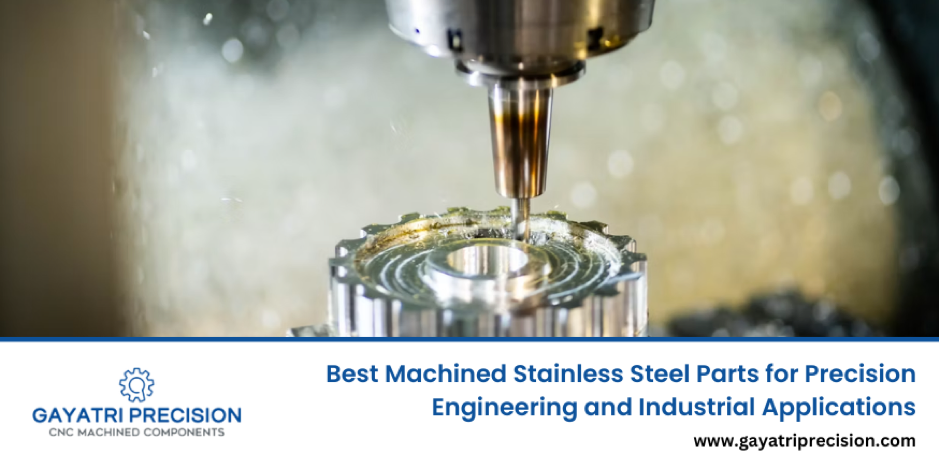
In today’s competitive manufacturing environment, precision, durability, and consistency are essential for achieving reliable industrial performance.
Industries such as automotive, engineering, energy, and industrial machinery depend on machined stainless steel parts that can withstand challenging operating conditions while maintaining strict dimensional accuracy. Stainless steel is valued for its exceptional strength, corrosion resistance, and long service life, making it a preferred material for critical applications.
When combined with advanced CNC machining technologies, stainless steel can be transformed into highly accurate and durable components designed to meet complex engineering requirements.
Professional stainless steel machining services enable manufacturers to produce high-quality precision stainless steel components with tight tolerances, superior finishes, and consistent performance.
Whether standard or custom stainless steel parts, these components play a vital role in improving equipment efficiency, reliability, and longevity. This blog explores their key benefits, applications, and importance in modern precision manufacturing.
Why Stainless Steel Is Preferred in Precision Manufacturing
Stainless steel remains one of the most versatile engineering materials available today. Its unique combination of mechanical properties makes it suitable for a wide range of industrial applications.
Some of the key advantages include:
- Excellent corrosion resistance
- High tensile strength
- Superior wear resistance
- Heat and temperature tolerance
- Long operational life
- Hygienic and easy-to-clean surfaces
- Attractive surface finish
- Recyclability and sustainability
Unlike many conventional metals, stainless steel maintains its structural integrity even in harsh environments. This makes it an excellent choice for applications exposed to moisture, chemicals, pressure, and extreme temperatures.
When processed through advanced machining techniques, stainless steel can be transformed into highly accurate components with exceptional dimensional stability.
Understanding Machined Stainless Steel Parts
Machined stainless steel parts are components manufactured by removing material from stainless steel workpieces using precision machining processes.
These processes allow manufacturers to create intricate geometries, tight tolerances, and customized designs tailored to specific applications.
Modern machining technologies enable the production of components ranging from simple shafts and bushings to highly complex precision-engineered parts.
Common machining operations include:
- CNC turning
- CNC milling
- Drilling
- Boring
- Threading
- Reaming
- Tapping
- Surface finishing
- Grinding
These processes ensure that each component meets strict engineering requirements while maintaining consistency across production batches.
Industries that demand high precision often depend on machined components because even minor dimensional deviations can affect performance, safety, and reliability.
The Growing Demand for Precision Stainless Steel Components
As industries adopt automation and advanced manufacturing technologies, the demand for precision stainless steel components continues to grow.
Modern machinery and equipment require components that deliver:
- Accurate fitment
- Smooth operation
- Reduced maintenance
- Longer service life
- Improved efficiency
- Reliable performance under stress
Precision-engineered stainless steel components help achieve these objectives while supporting high-performance industrial operations.
Applications requiring exact tolerances often include rotating assemblies, motion control systems, fluid handling equipment, and heavy-duty machinery. In these environments, component accuracy directly influences productivity and equipment lifespan.
Manufacturers that invest in advanced machining technology are better positioned to deliver components that meet stringent industry standards and customer expectations.
Benefits of Stainless Steel Machining Services
Professional stainless steel machining services provide manufacturers with access to advanced production capabilities and technical expertise.
Some of the major benefits include:
Exceptional Accuracy
Precision machining ensures every component is manufactured according to exact specifications. This level of accuracy minimizes assembly issues and improves overall system performance.
Consistent Quality
Modern CNC machines maintain repeatability throughout production runs, ensuring consistent dimensions and surface finishes.
Design Flexibility
Machining processes can accommodate complex geometries that may be difficult to achieve through alternative manufacturing methods.
Material Optimization
Efficient machining strategies reduce material waste while maximizing production efficiency.
Scalability
Whether producing prototypes, small batches, or high-volume production runs, machining solutions can adapt to changing project requirements.
Enhanced Reliability
Accurately machined components contribute to smoother operations and reduced downtime in industrial environments.
These advantages make professional stainless steel machining services an essential part of modern manufacturing supply chains.
Industries That Use Machined Stainless Steel Parts
The versatility of stainless steel allows it to serve a wide range of industries where durability and precision are essential.
Industrial Machinery
Industrial equipment often operates under heavy loads and demanding conditions. Stainless steel components provide the strength and wear resistance required for long-term performance.
Common parts include:
- Shafts
- Bushings
- Couplings
- Flanges
- Housings
- Fastening elements
Automotive Industry
Automotive manufacturers rely on precision-machined components for critical systems where reliability and dimensional accuracy are essential.
Applications include:
- Engine assemblies
- Transmission systems
- Suspension components
- Fuel handling systems
- Exhaust system components
Energy and Power Generation
Power generation facilities require components capable of withstanding high temperatures, pressure, and corrosive environments.
Typical applications include:
- Turbine components
- Pump parts
- Valve assemblies
- Structural supports
Fluid Handling Systems
Stainless steel is widely used in equipment that transports liquids and gases due to its corrosion resistance and durability.
Applications include:
- Valves
- Connectors
- Fittings
- Pump components
- Flow control devices
Engineering Equipment
Engineering companies frequently utilize precision stainless steel components in specialized equipment where performance and reliability are non-negotiable.
These components help ensure smooth operation and extended equipment life.
CNC Technology in Stainless Steel Machining
Modern manufacturing industries depend on CNC (Computer Numerical Control) technology to produce high-quality stainless steel components with exceptional precision and consistency.
CNC machines operate through programmed instructions that automate machining processes, enabling manufacturers to achieve accurate dimensions, repeatable results, and efficient production.
How CNC Technology Improves Manufacturing
CNC machining eliminates many of the limitations associated with manual machining by ensuring greater control over every stage of production. This technology allows manufacturers to create complex geometries and intricate designs while maintaining strict quality standards.
Key Advantages of CNC Machining
Some of the major benefits of CNC technology include:
- Tight tolerance control for accurate component production
- Faster production cycles and improved efficiency
- Consistent quality across multiple production batches
- Reduced risk of human error
- Capability to manufacture complex and detailed parts
- Superior surface finishes and enhanced aesthetics
- Better material utilization and reduced waste
Ensuring Precision and Reliability
For manufacturers producing machined stainless steel parts, CNC technology plays a vital role in maintaining dimensional accuracy and product reliability.
Advanced CNC equipment can handle both small and large production runs while ensuring every component meets exact specifications.
This combination of precision, efficiency, and repeatability makes CNC machining an essential part of modern stainless steel manufacturing and precision engineering applications.
Custom Stainless Steel Parts for Specialized Applications
Standard components may not always meet the unique demands of modern industrial equipment.
Many industries require parts that are specifically engineered to fit specialized machinery, complex assemblies, or application-specific operating conditions. This is where custom stainless steel parts become an essential solution.
Why Custom Manufacturing Matters
Custom manufacturing enables engineers and manufacturers to develop components that align precisely with performance requirements, dimensional specifications, and operational goals.
These tailored solutions help overcome challenges that cannot be addressed by standard off-the-shelf products.
Key Benefits of Custom Stainless Steel Parts
Custom-designed components offer several advantages, including:
- Optimized performance for specific applications
- Improved compatibility with existing equipment
- Efficient use of available installation space
- Enhanced system reliability and productivity
- Compliance with industry-specific standards and requirements
- Greater flexibility in design and functionality
Applications in Specialized Industries
Custom stainless steel components are widely used in industries where precision and reliability are critical. They support specialized machinery, industrial automation systems, engineering equipment, fluid handling systems, and other high-performance applications.
Supporting Long-Term Operational Efficiency
By manufacturing components according to exact specifications, businesses can improve equipment functionality, reduce maintenance requirements, and achieve better operational outcomes.
Custom solutions also provide greater design flexibility, allowing organizations to adapt to evolving production needs while maintaining high standards of quality and performance.
Key Considerations in Stainless Steel Machining
Producing high-quality stainless steel components requires careful attention throughout the manufacturing process.
Material Selection
Different stainless steel grades offer unique characteristics.
Factors influencing material selection include:
- Corrosion resistance requirements
- Mechanical strength
- Temperature exposure
- Wear resistance
- Cost considerations
Precision Tolerances
Many industrial applications require extremely tight tolerances to ensure proper assembly and functionality.
Advanced machining equipment enables manufacturers to achieve these specifications consistently.
Surface Finish Requirements
Surface quality can significantly impact performance, particularly in applications involving friction, sealing surfaces, or aesthetic requirements.
Various finishing processes can be applied to achieve desired surface characteristics.
Production Efficiency
Optimized machining strategies help reduce cycle times while maintaining component quality.
Efficient manufacturing processes contribute to cost savings and shorter lead times.
The Role of Precision Engineering in Modern Manufacturing
Precision engineering drives modern manufacturing by delivering accurate, reliable components that enhance performance, efficiency, and competitiveness across industries.
Why Precision Engineering Matters
High-performance equipment requires components that consistently deliver reliable results. Precision-engineered parts help improve overall system efficiency and operational stability.
Key requirements include:
- Perfect fit and assembly compatibility
- Consistent performance under demanding conditions
- High resistance to wear and tear
- Reduced downtime and maintenance needs
- Accurate and reliable operation over time
Supporting Modern Industrial Demands
As manufacturing evolves, advanced machining technologies and quality-driven processes enable the production of complex precision components that improve productivity, support innovation, and deliver reliable long-term performance across diverse industrial applications.
By adopting modern machining technologies and quality-focused manufacturing processes, companies can produce complex components that support innovation.
Advantages of Partnering with an Experienced Precision Manufacturer
Choosing the right manufacturing partner can significantly impact project outcomes.
Experienced providers of stainless steel machining services offer several advantages:
Technical Expertise
Skilled engineering teams understand machining complexities and can recommend optimal manufacturing solutions.
Advanced Infrastructure
Modern machining facilities support efficient production and high-quality output.
Consistent Production Standards
Established quality systems ensure repeatable results across projects and production volumes.
Custom Manufacturing Capabilities
Companies with strong engineering capabilities can develop tailored solutions for complex requirements.
Reliable Delivery
Efficient production planning helps meet project deadlines without compromising quality.
These capabilities contribute to stronger partnerships and better long-term manufacturing outcomes.
The Role of Precision Engineering in Modern Manufacturing
Precision engineering is no longer limited to niche industries. Today, virtually every manufacturing sector depends on accurately produced components to maintain efficiency and competitiveness.
High-performance machinery requires components that:
- Fit perfectly
- Function consistently
- Resist wear
- Minimize downtime
- Maintain operational accuracy
This growing demand has increased the importance of reliable suppliers capable of producing high-quality precision stainless steel components for a wide range of applications.
Manufacturers that embrace advanced machining technologies are better equipped to support evolving industry requirements and increasingly complex product designs.
Sustainability Benefits of Stainless Steel Components
Sustainability has become an important consideration in industrial manufacturing.
Stainless steel offers several environmental advantages:
- Long service life
- Reduced replacement frequency
- High recyclability
- Lower lifecycle costs
- Minimal material degradation
Durable components reduce waste generation while supporting sustainable manufacturing practices.
Additionally, precision machining processes continue to evolve toward greater efficiency, helping manufacturers reduce energy consumption and material waste.
These benefits make stainless steel an environmentally responsible choice for modern engineering applications.
Future Trends in Stainless Steel Machining
The future of precision manufacturing is being shaped by advancements in automation, digital technology, and smart production systems.
Emerging trends include:
- Advanced CNC automation
- Real-time process monitoring
- Digital manufacturing integration
- Improved tooling technologies
- Enhanced quality inspection systems
- Data-driven production optimization
These innovations enable manufacturers to produce increasingly complex custom stainless steel parts while maintaining high standards of accuracy and efficiency.
As industrial requirements continue to evolve, precision machining will remain essential for producing reliable and high-performance components.
Looking for precision-engineered stainless steel components? Partner with Gayatri Precision for advanced machining solutions, consistent quality, and reliable manufacturing excellence.
FAQs About Stainless Steel Machining for Industrial Applications
- Why are machined stainless steel parts widely used in industrial applications?
They offer excellent strength, corrosion resistance, dimensional accuracy, and long-term durability, making them suitable for demanding engineering and manufacturing environments.
- What are the benefits of professional stainless steel machining services?
These services ensure precise manufacturing, consistent quality, tight tolerances, and reliable production of components for various industrial requirements.
- Where are precision stainless steel components commonly used?
They are widely used in automotive systems, industrial machinery, energy equipment, engineering assemblies, and fluid handling applications.
- Why do businesses choose custom stainless steel parts?
Custom components are designed to meet specific performance, design, and operational requirements, helping improve equipment compatibility and overall efficiency.