
What is CNC Machining?
CNC machining is a process that uses computer software to control the movement of a machine tool. It stands for Computer Numerical Control, and it’s also known as CNC milling or CNC turning. It is mostly used in industries such as aerospace, automotive, medical devices and more.
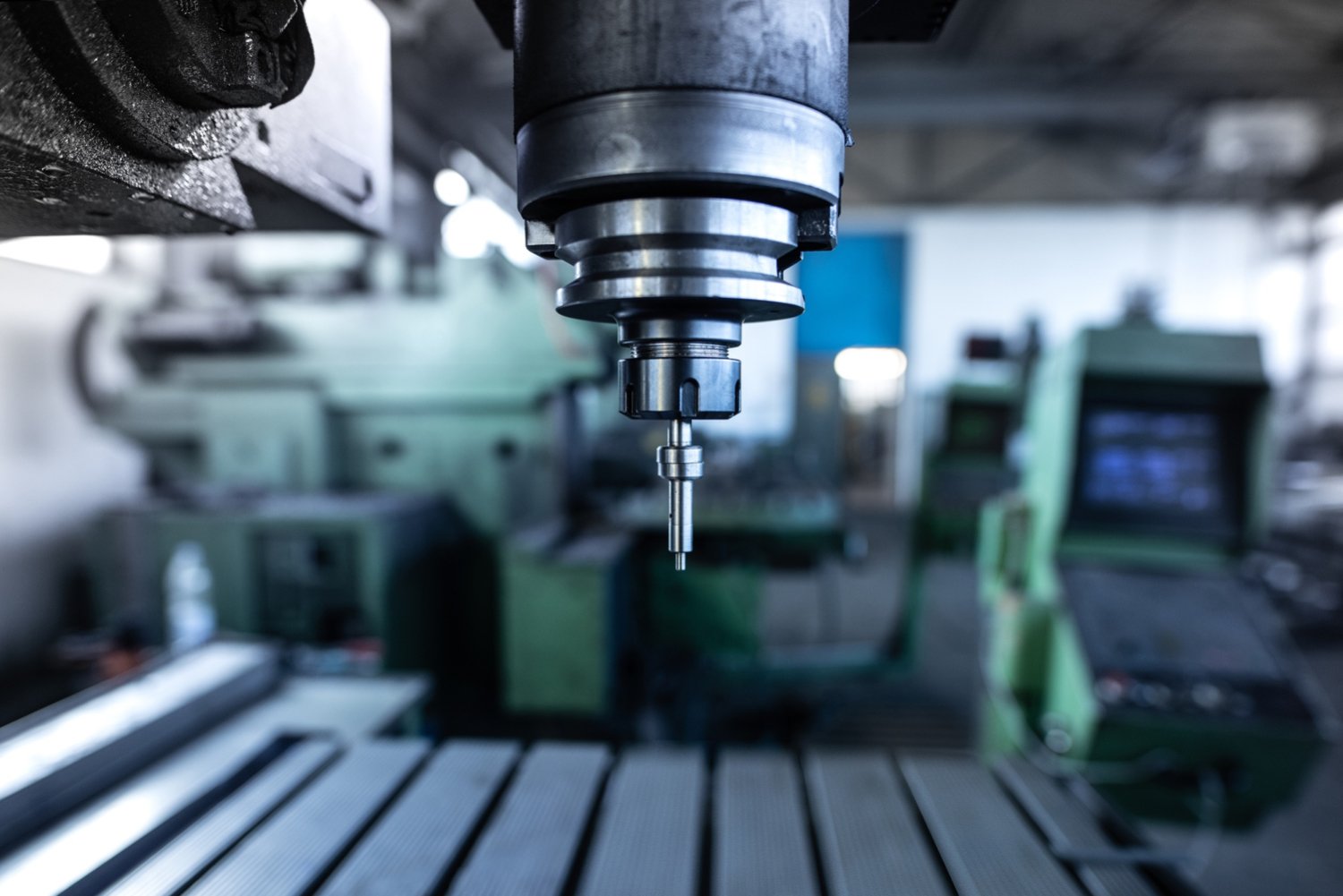
CNC machining is often used to produce components with complex shapes that cannot be made by traditional manufacturing processes such as casting or forging.
It allows complex parts to be produced quickly and consistently, with very little waste material. This makes it ideal for creating prototypes or mass-producing parts in small batches.
CNC machining can also be done in small shops or large factories. It allows companies to produce parts that are extremely precise and consistent in shape, size and finish.
Types of CNC Machines
Here are the three different types of CNC machines…
1. CNC Lathes and Turning Machines
CNC lathes and turning machines are characterized by their ability to rotate (turn) materials during the machining operation. The cutting tools for these machines are fed in a linear motion along the rotating bar stock; removing material around the circumference until the desired diameter (and feature) is achieved.
A subset of CNC lathes are CNC Swiss lathes (which are the type of machines Pioneer Service operates). With CNC Swiss lathes, the bar of material rotates and slides axially through a guide bushing (a holding mechanism) into the machine. This provides much better support for the material as the tooling machines the part features (resulting in better/tighter tolerances).
CNC lathes and turning machines can create internal and external features on the component: drilled holes, bores, broaches, reamed holes, slots, tapping, tapers and threads. Components made on CNC lathes and turning centers include screws, bolts, shafts, poppets, etc.
2. CNC Milling Machines
CNC milling machines are characterized by their ability to rotate cutting tools while holding the material workpiece/block stationary. They can produce a wide range of shapes including face-milled features (shallow, flat surfaces and cavities in the workpiece) and peripheral milled features (deep cavities such as slots and threads).
Components produced on CNC milling machines are typically square or rectangular shapes with a variety of features.
3. CNC Laser Machines
CNC laser machines have a pointed router with a highly focused laser beam that is used to precisely cut, slice or engrave materials. The laser heats the material and causes it to melt or vaporize, creating a cut in the material. Typically, the material is in a sheet format and the laser beam moves back and forth over the material to create a precise cut.
This process can produce a wider range of designs than conventional cutting machines (lathes, turning centers, mills), and often produce cuts and/or edges that do not require additional finishing processes.
CNC laser engravers are often used for part marking (and decoration) of machined components. For example, it can be difficult to machine a logo and company name into a CNC turned or CNC milled component. However, laser engraving can be used to add this to the component even after the machining operations are complete.
Procedure of CNC Machining
The first step of CNC machining is to create a CAD drawing of the parts which are needed. The CAD drawing is then converted into G-code, which is the programming language that CNC machines understand.
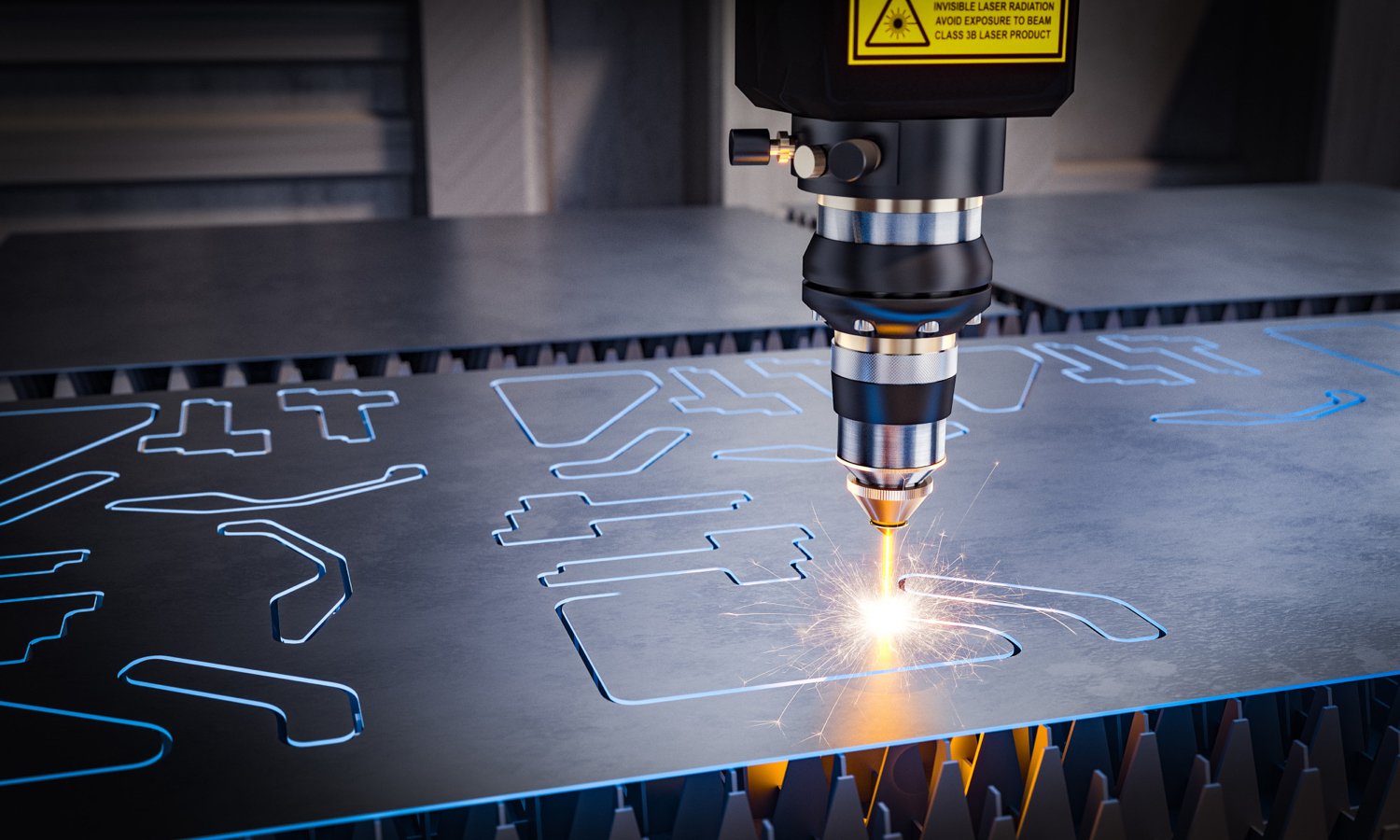
Once the machine has been programmed, it’s ready to go! The machine operator loads the CAD drawing into the machine and presses “Start.”
The cutting tool will move across the stock material according to the coordinates in the CAD drawing and removes material layer by layer until only your custom part remains.
The process is highly accurate, and it can achieve dimensions as small as 0.001” by using smaller cutting tools.
CNC machining also has a high degree of repeatability, meaning that if you need to manufacture 100 parts you can program the machine to cut all of them exactly the same.
One of the most common CNC machined parts is a simple nut and bolt. A drill bit can be used to cut the hole for the bolt, and then an end mill can cut the threads in that hole. It’s also possible to program in a counter bore or another type of hole feature.
Benefits of CNC machining
CNC machining is a very efficient process that can be used to create parts of any size or shape. This is why it has become so popular in manufacturing industries.
CNC machining has many benefits, including:
- Flexibility: With CNC machining, you can quickly and easily change the design of your part without having to make any changes to the machine itself. This means that your design can be altered at any time without having to wait for new tooling to be made or special fixtures to be designed.
- Accuracy: CNC machining is capable of producing parts with extremely high accuracy, which are often better than those produced through other processes such as casting or forging. This makes CNC machined parts ideal for use in sensitive applications where precise measurements or tight tolerances are required.
- Cost-effectiveness: CNC machining allows you to save costs by producing more parts with less effort and fewer resources than other methods require. It also reduces waste by eliminating human error during operations such as drilling and milling, which results in less material being used overall.
Advantages of CNC machining over Other Manufacturing Processes
In the manufacturing industry, CNC machining is a process that uses computer numeric control (CNC) to produce parts. CNC is used to cut, shape and form a wide range of materials such as plastic, wood and metal. CNC machines are also called machining centers because they have multiple axes of movement.

The parts produced by CNC machines are typically more accurate than those produced by hand machining or stamping. This is because the computer coordinates all of the movements of the machine tools needed to create each part, which allows for small variations in measurements.
CNC machines can also be programmed to produce multiple parts at once, which can save companies time and money. In addition, using CNC machining allows companies to easily make changes to their products without having to redesign them from scratch. This can make it easier for them to respond quickly to market needs and consumer demands.
One of the biggest advantages of using CNC machines is that they’re versatile — you can use them on nearly any material type or shape you want. They’re also relatively easy to learn how to use because most have a basic user interface so you don’t need extensive training in order to operate one successfully.
How to Choose the Best CNC Manufacturer?
A good CNC manufacturer should have sufficient experience in manufacturing all types of CNC machines, including CNC routers and CNC lathes. They must also provide excellent customer service and respond to your queries in a timely manner.
We at Gayatri Precision established our company in 1994, and since then we are working as a manufacturing and job-shop for subcontract machining to cater to the Automobile market in Mumbai, India.
We have one of the most high-tech CNC workshop with CNC Turning Center that offers custom-made engineering parts as per our customer’s drawings and specifications.
We have a team of expert and skilled professionals who are dedicated to deliver top quality products to our customers.
For any query, you can contact Gayatri Precision through our website directly.